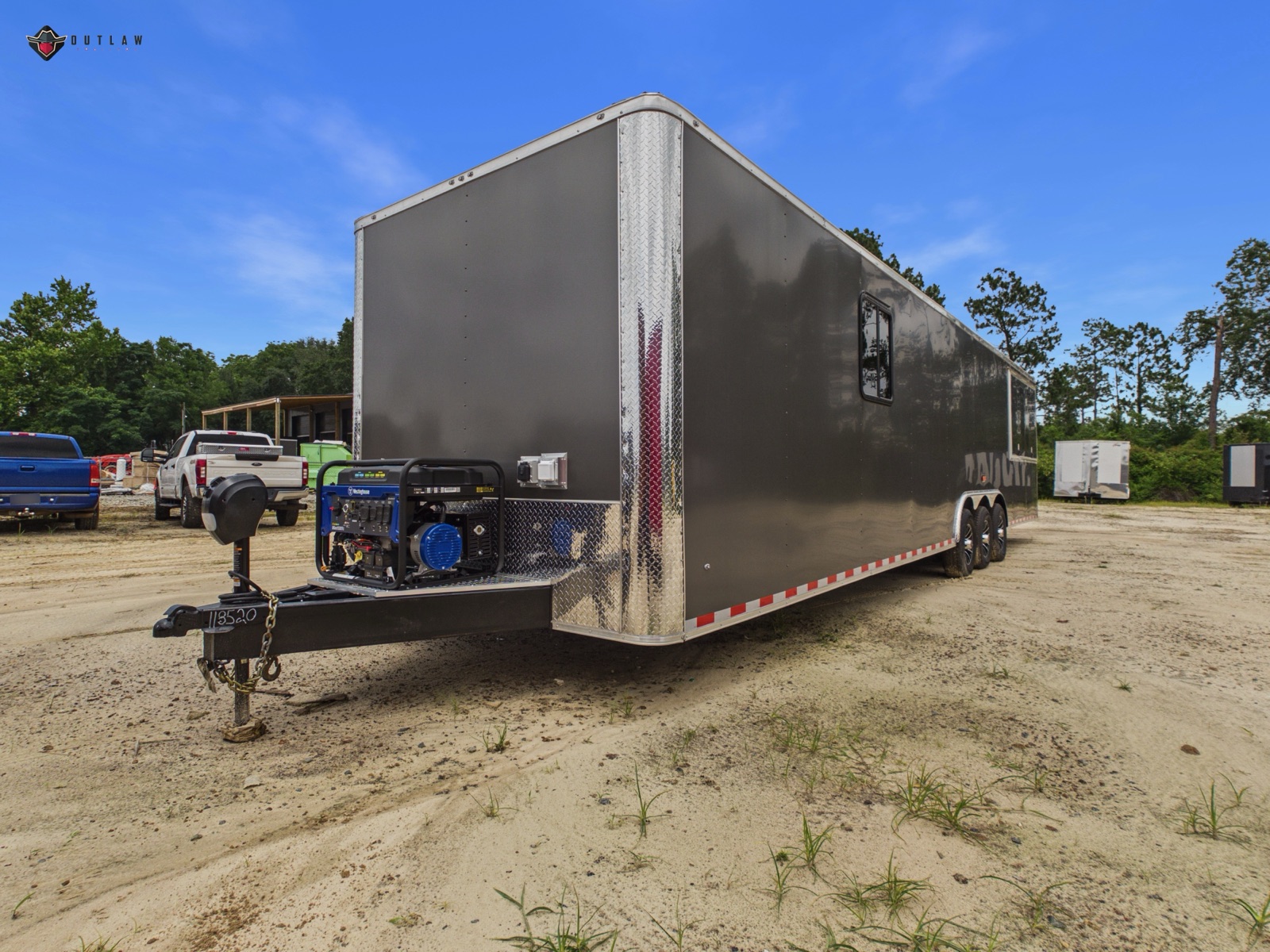
Generators and Power: Mounting, Sizing and Safety
Getting power into a trailer is straightforward. Doing it safely, and sizing it to what you actually run, is where it goes wrong.
September 5, 2026 · 5 min read
A mobile operation needs power. Here is how to think about it before you buy a generator that is wrong for the job.
Size to actual load, not to headline numbers
- 1List every device you will run and its power draw.
- 2Note which run simultaneously — that is the number that matters.
- 3Account for startup surge on anything with a motor. Compressors and pumps draw far more starting than running.
- 4Add margin, but not enormously — a heavily oversized generator runs inefficiently and costs more in fuel.
Undersizing means tripping out mid-job. Oversizing means paying for and hauling capacity you never use.
Mounting
- **Exterior tongue mount** keeps exhaust and noise outside and frees interior space. Exposed to weather and to theft, so it needs a secure enclosure.
- **Interior compartment** protects it, and it must be sealed from the cargo area and vented directly outside. This is a safety requirement, not a preference.
- **Removable, carried loose** is the cheapest and least convenient, and it means the generator is not secured in transit.
Exhaust and carbon monoxide
This is the part that matters most and it is the part people cut corners on.
- A generator's exhaust must vent outside, away from doors, vents and anyone working.
- An interior compartment must be genuinely sealed from the cargo and work area.
- Never run a generator inside an enclosed space, including with the doors open.
- A carbon monoxide detector in any trailer people occupy while a generator runs.
- Consider prevailing airflow — exhaust routed to a spot where it is drawn back in is not vented.
Fuel
- Store fuel in approved containers, secured so they cannot move.
- Vented storage, separated from living or work space.
- Enough for the day's work, not enough to make the trailer a fuel depot.
- Our storm response guide covers the case where local fuel is unavailable.
The alternatives
- **Battery and inverter** for lighter loads — quiet, no exhaust, limited capacity.
- **Shore power** where you work somewhere with an outlet. Cheap to include and worth having.
- **A combination**, which is what most working trailers end up with — battery for lighting and light tools, generator for the heavy draw.
Wire it at build
Outlets, switching and the distribution run are far cheaper to install while the wall is open. Tell us what you will run and we will rough it in. Call (800) 281-5084.
Frequently Asked
How do I size a generator for a work trailer?+
List every device and its draw, note which run at the same time, account for startup surge on anything with a motor, and add modest margin. Undersizing trips out mid-job; heavy oversizing wastes fuel and capacity.
Can a generator be mounted inside the trailer?+
Only in a compartment genuinely sealed from the cargo and work area and vented directly outside. Never run a generator inside an enclosed space, and fit a carbon monoxide detector in any trailer people occupy while it runs.
Do I need a generator at all?+
Not always. Battery and inverter handle lighter loads quietly with no exhaust, and shore power is cheap to include for anywhere with an outlet. Most working trailers end up with a combination.
Ready to roll?
200+ trailers in stock in Douglas, GA. Financing for all credit types.