Spread Axles: What They Do and When to Order Them
Spreading the axles is a small line on the options sheet with a real effect on how a long trailer tows. Here is what it does and what it costs you.
September 13, 2026 · 4 min read
On a standard tandem trailer the two axles sit close together, with just enough room for the tires not to touch. A spread axle setup moves them farther apart. The frame options list offers it on both tandem and triple axle trailers, and it is one of those upgrades that either matters a lot for your trailer or not at all. This is how to tell which.
What spreading the axles changes
Moving the axles apart gives the trailer a longer wheelbase between its own tires. That does three things. It makes the trailer track straighter behind the truck, especially on the highway and in crosswinds, because the tires resist yaw over a longer lever. It spreads the load across a longer section of the frame instead of concentrating it at one point. And it widens the sweet spot for loading, so a heavy item can sit a little forward or aft of center without upsetting the tongue weight as much.
Who benefits
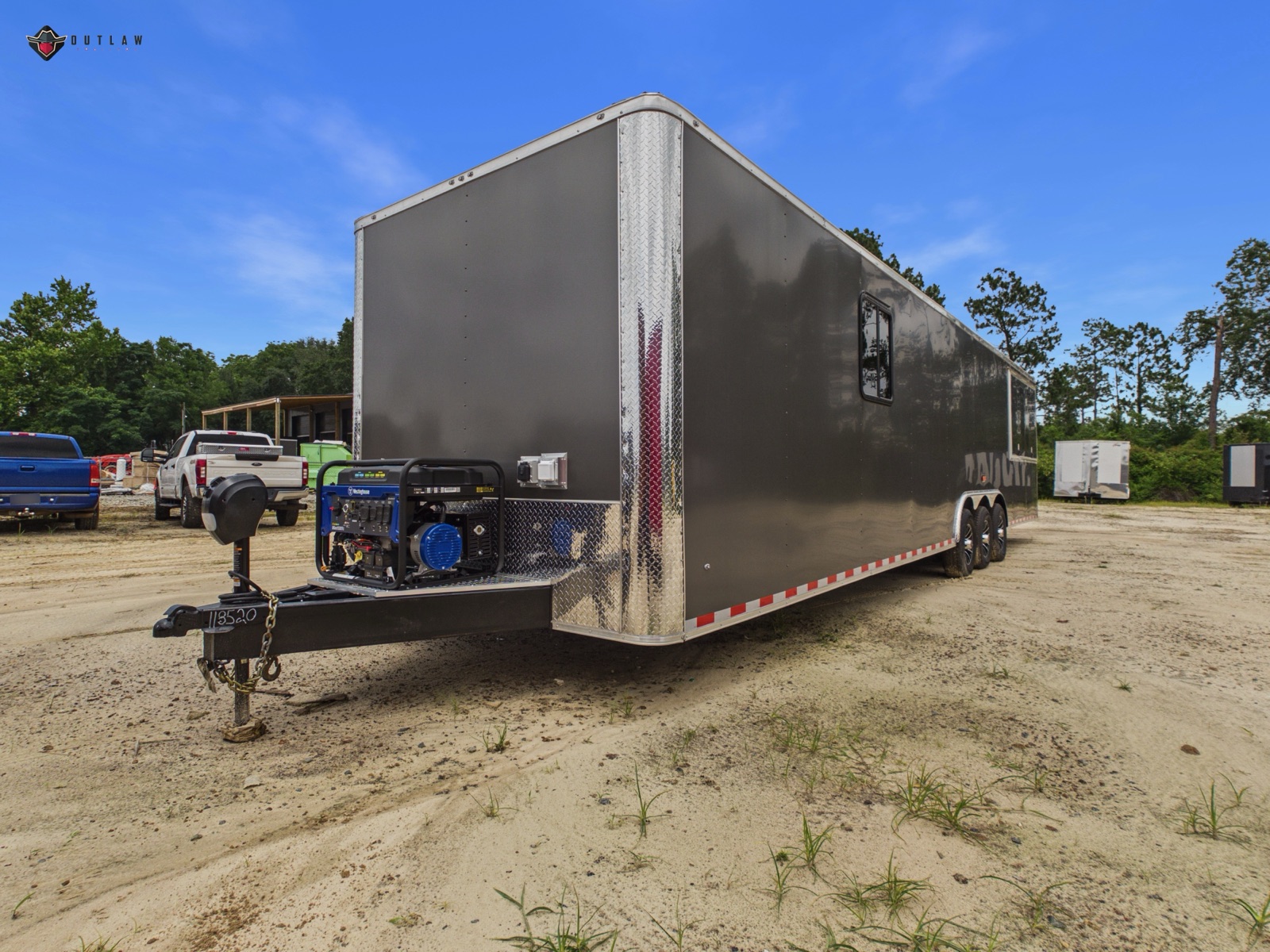
The trailers that gain the most are long, heavy and towed at highway speed: race haulers, enclosed car haulers, gooseneck equipment trailers and long mobile business builds. On a 24-foot or longer 8.5-wide tandem, the difference in stability is noticeable on the first trip. Our post on crosswinds and passing trucks explains why tall trailers get pushed around; spread axles are one of the build-time answers.
Short trailers do not need it. A 7x14 landscaping trailer with the axles spread gains very little and gives up some maneuverability for nothing.
What it costs you
There are two trade-offs, and both are about turning. When a trailer with spread axles makes a tight turn, the tires on the two axles want to follow different arcs and end up scrubbing sideways across the pavement. That accelerates tire wear on trailers that do a lot of tight maneuvering, and it puts extra load on the axle mounts and the frame at the moment of the turn. A trailer that spends its life on the interstate barely notices. One that gets jockeyed around a jobsite or a fairground every day will wear tires faster.
The second is the fender. Spread axles need a longer fender or two separate fenders, which changes the exterior appearance and, on a 7-wide, the interior wheel-well layout. On an 8.5-wide the fenders are outside the box so the interior is unaffected.
Spread axles and triple axles
Triple axle trailers already have a long tire footprint, and spreading them further can make the scrub problem worse. It is normally ordered only on the longest goosenecks and race haulers where highway stability outweighs everything else. Our single vs tandem vs triple axle guide covers when a third axle is worth it in the first place.
Spread axles and tongue weight
One thing spreading the axles does not do is move the center of the axle set. The builder places the pair so the midpoint lands where a standard tandem would sit, which keeps the tongue weight in the normal range for an empty trailer. What changes is how forgiving the loaded trailer is: because the tires are farther apart, a heavy item placed a foot ahead of or behind the midpoint shifts a smaller share of its weight onto or off the hitch. That is the loading window mentioned above, and it is the reason car haulers like the option. The car can sit where the escape door needs it rather than exactly where the tongue scale says it must.
How to decide
- Trailer 20 feet or longer and 8.5-wide: spread axles are worth a serious look.
- Mostly highway miles: yes.
- Mostly short trips, tight lots and jobsites: probably not.
- Carrying a single heavy item like a car or a machine: yes, for the wider loading window.
- Under 18 feet or 7-wide and narrower: skip it.
If you are speccing a long trailer, ask us about it alongside the axle rating, the main frame size and the tongue. They all work together, and the custom build conversation is the right place to sort them out.
Frequently Asked
Do spread axles change the GVWR?+
No. The rating comes from the axles, tires and frame, not from the spacing. Spread axles change how the trailer handles the load, not how much it can carry.
Will spread axles make backing harder?+
Slightly. The longer tire footprint resists pivoting, so the trailer responds a little slower to steering input in reverse. Most people adjust in a day.
Can axles be spread on an existing trailer?+
It is a frame modification involving new hangers, fenders and often brake wiring. It can be done, but it is far cheaper to order it at build time.
Ready to roll?
200+ trailers in stock in Douglas, GA. Financing for all credit types.