Single vs Tandem vs Triple Axle Trailers: Which Do You Need?
Your axle setup decides how much you can haul, how the trailer rides, and how much you spend on tires and upkeep. Here is how to pick between single, tandem, and triple axle.
June 25, 2026 · 7 min read
When you shop for a cargo trailer, one of the first choices you hit is the axle setup: single, tandem, or triple. It sounds like a small detail, but it drives almost everything else. Axle count sets your load capacity, your ride quality, how the trailer behaves at highway speed, and even how much you spend keeping it on the road. Get it right and the trailer works with you. Get it wrong and you fight it every trip.
Here is a plain-spoken breakdown of what each axle setup does best, so you can match it to the way you actually haul.
Single Axle Trailers: Light, Nimble, and Easy
A single axle trailer rides on one axle with two wheels. These are the light, easy-handling trailers you see hauling lawn gear, a motorcycle, or a small load of household goods. They typically top out around 3,500 pounds of gross weight, which covers a surprising amount of everyday hauling.
Their strengths are simple. They are lighter to pull, so a smaller vehicle handles them fine. They maneuver in tight spots because a single axle pivots easily, which makes backing into a driveway or spinning around in a lot much simpler. And they cost less to buy and maintain, with two tires instead of four or six.
- Best for: lawn care, motorcycles, small moves, light tools, weekend hauling
- Typical capacity: up to about 3,500 pounds gross
- Upside: cheaper, lighter, easy to maneuver and park
- Trade-off: no second tire if one blows, bouncier ride, lower capacity
The one thing to keep in mind: with a single axle, a flat tire means you are stopped. There is no backup wheel on that side to limp you to a safe spot. For short local runs that is rarely an issue, but it is worth knowing.
Tandem Axle Trailers: The All-Around Workhorse
A tandem axle trailer runs two axles and four wheels. This is the setup most serious haulers land on, and for good reason. Doubling the axles roughly doubles the load capacity, commonly into the 7,000-pound range and up, and it completely changes how the trailer rides.
Two axles spread the weight and soak up bumps, so a tandem tows smoother and tracks straighter at highway speed. It is far more stable in crosswinds and when big rigs blow past you. And if you lose a tire, the other three keep you rolling long enough to reach a safe place to change it. That stability and peace of mind is why tandems dominate the contractor and enclosed cargo world.
If you tow on the highway, haul anything heavy, or just want the trailer to feel planted, a tandem axle is almost always worth the small step up in price.
- Best for: contractors, movers, car and ATV hauling, highway towing, enclosed cargo
- Typical capacity: 7,000 pounds gross and up
- Upside: stable ride, higher capacity, brakes on multiple axles, tire redundancy
- Trade-off: costs more, harder to maneuver by hand, four tires to maintain
Triple Axle Trailers: Heavy-Haul Muscle
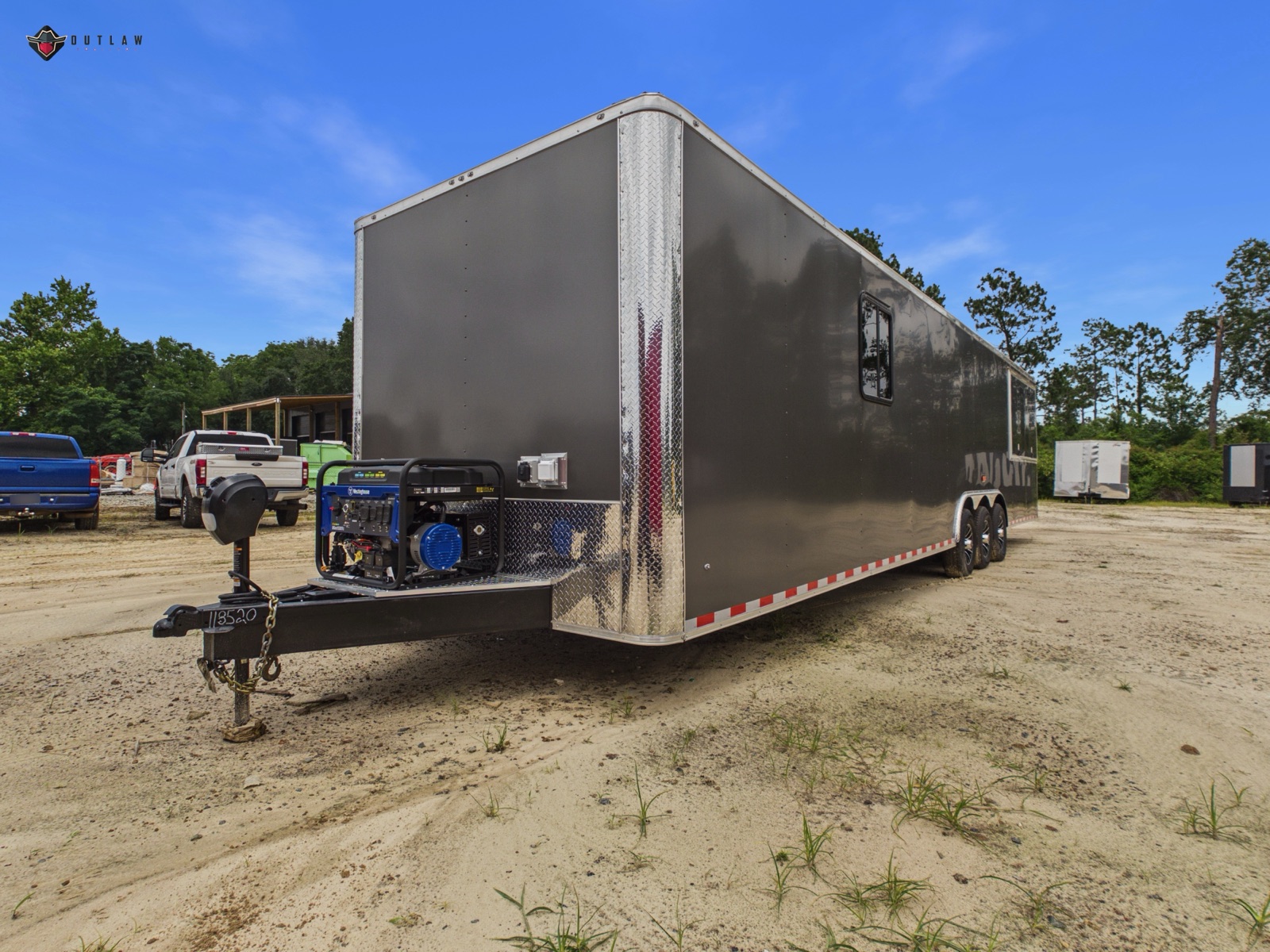
A triple axle trailer adds a third axle and two more wheels for a total of six. This is heavy-haul territory. When you are moving big equipment, multiple vehicles, a fully loaded race hauler, or a long trailer that needs serious capacity, three axles carry the load without overworking the tires or the suspension.
The extra axle spreads weight even further, which is easier on your tires and gives you a very stable, planted ride under a heavy load. Triple axles are common on the longest trailers and on goosenecks built for real weight. The trade-off is that they are heavy, they demand a capable tow vehicle, and they do not turn as tightly, so backing into tight spaces takes more patience.
- Best for: heavy equipment, long race and toy haulers, goosenecks, maximum capacity
- Upside: the highest capacity, very stable under heavy loads, spreads weight across six tires
- Trade-off: heaviest to tow, needs a strong truck, least maneuverable, six tires to maintain
How to Choose Between Them
The decision usually comes down to weight and where you tow. Work through it in this order:
- 1Add up your heaviest realistic load, then add margin. If it comfortably stays under 3,500 pounds and you tow mostly local, a single axle can serve you well.
- 2If your load runs heavier, you tow on the highway, or you want a smoother, safer ride, step up to a tandem axle. This covers the majority of cargo trailer buyers.
- 3If you are hauling heavy equipment, multiple vehicles, or running a long trailer near its limits, go triple axle and make sure your tow vehicle is rated for it.
One more tip: never buy right at the edge of your capacity. Loads grow, and towing near the maximum is hard on brakes, tires, and nerves. A little extra headroom pays off every trip.
At Outlaw Supercenter in Douglas, Georgia, we stock trailers in all three axle setups, from single up to heavy-haul triples and goosenecks, so you can see them side by side. Browse the inventory online, take advantage of financing for all credit types, or call us at (800) 281-5084 and tell us what you haul. We will point you to the axle setup that fits.
Frequently Asked
Is a tandem axle trailer better than a single axle?+
For most haulers, yes. A tandem axle carries more weight, rides smoother, tracks straighter on the highway, and keeps you rolling if one tire fails. A single axle is still a great choice for light, local hauling where its lower cost and easy maneuvering shine.
When do I actually need a triple axle trailer?+
Choose a triple axle when you are hauling heavy equipment, multiple vehicles, or running a long trailer near its capacity. The third axle spreads the weight and keeps the ride stable, but it needs a truck rated to pull that much.
Does more axles mean more tire maintenance?+
Yes. A single axle has two tires, a tandem has four, and a triple has six. More axles mean more tires to rotate, inspect, and eventually replace, so factor that into your ongoing cost along with the higher capacity you gain.
Do tandem axle trailers have brakes on both axles?+
Many do, and it is a big safety advantage. Brakes on multiple axles give you far more stopping power under load. When you shop, confirm the brake setup on the specific trailer, since it can vary by size and configuration.
Ready to roll?
200+ trailers in stock in Douglas, GA. Financing for all credit types.