Electrical Packages for Work Trailers Explained
A wired trailer is the difference between a storage box and a mobile shop. Here is what goes into an electrical package and how much you need.
March 19, 2026 · 8 min read
There is a moment every trailer owner hits where they wish they could just plug something in. A drill charger, a work light, a fridge, a compressor. A bare trailer leaves you running extension cords out the door and hoping it does not rain. A properly wired trailer turns the whole thing into a mobile shop you can actually work in. Electrical is the upgrade customers thank us for most, and it is also the one that is a real pain to add later. Here is what goes into a package and how to size it for your work.
The Building Blocks of an Electrical Package
An electrical package is not one thing, it is a set of pieces you combine to fit the job. Understanding each part helps you decide how far to take it.
- Breaker box: the heart of the system, distributes and protects your circuits
- Wall outlets: 110-volt receptacles placed where you actually need power
- Interior LED lighting: bright, low-draw lights so you can see your work
- Exterior lighting: flood or scene lights for working after dark
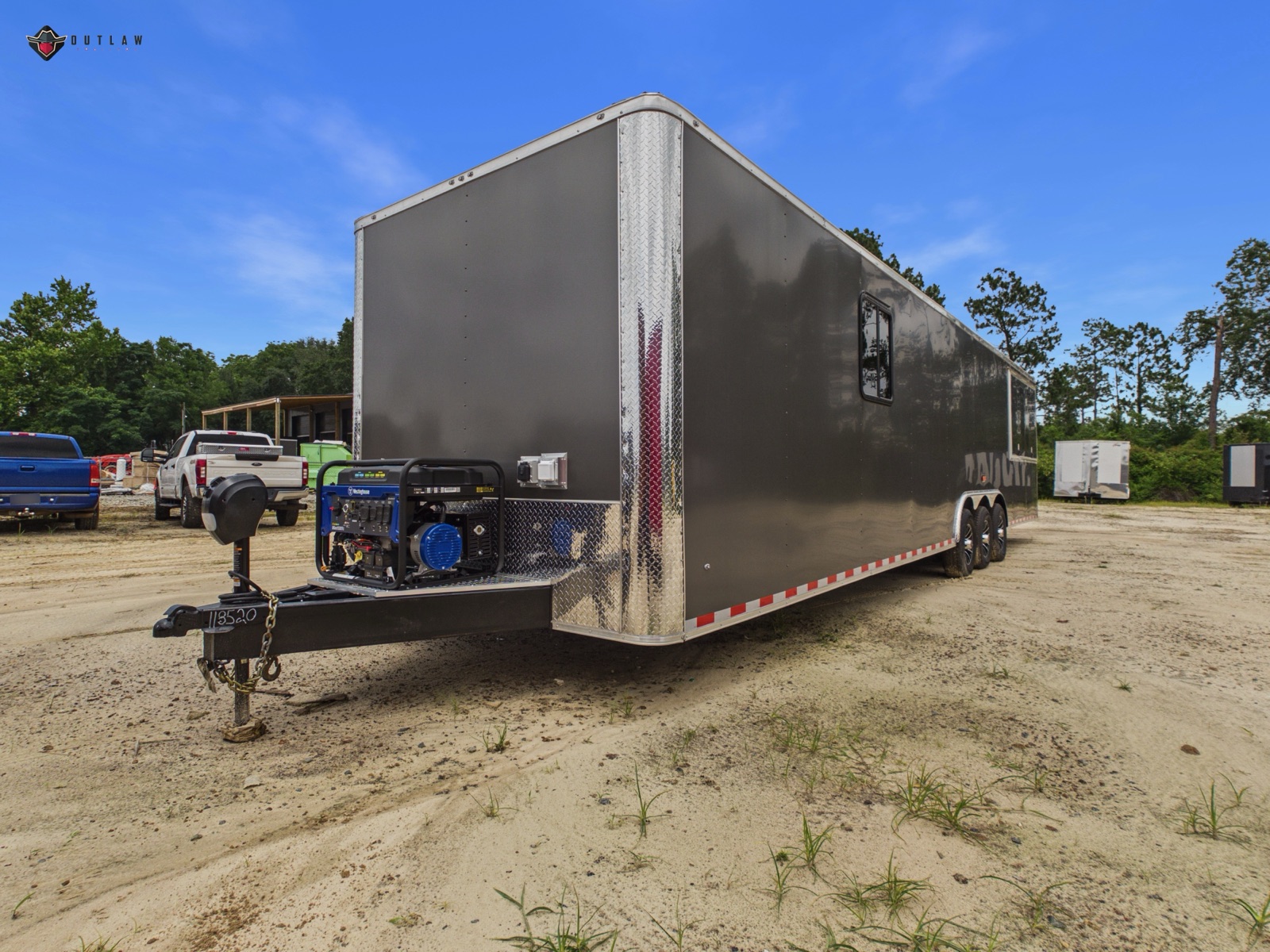
- Generator door: a vented hatch so a generator can run without hauling it inside
- Shore power inlet: plug the trailer into a wall or pedestal at the shop or campsite
Start With How You Will Power It
Before you count outlets, decide where your power comes from. Some folks run everything off a generator, so a generator door and a proper inlet matter most. Others plug into shore power at the shop or a campsite pedestal, so a shore power inlet is the priority. Many do both. Knowing your power source shapes the whole package, because it tells you what the breaker box has to feed and how it all connects.
Common power setups
A generator setup gives you power anywhere, which is why it is popular with contractors and vendors who work off-grid. Shore power is cleaner and quieter when you are parked somewhere with a plug. A build that supports both gives you the most flexibility, letting you plug in when you can and fire up the generator when you cannot.
Sizing the Package to Your Load
The mistake people make is under-wiring. Add up what you will run at the same time. A couple of chargers and a light is a light load. A shop with a compressor, a table saw, and lights all running at once is a heavy one that needs a bigger panel and more circuits. It is far cheaper to spec enough capacity up front than to rewire when you outgrow it. When in doubt, build in a little headroom.
Nobody has ever told us they wish they had put fewer outlets in their trailer.
Placement Matters as Much as Quantity
Where the outlets go is as important as how many you have. Think through your workflow. Put receptacles at bench height where you will use tools, near the door for quick access, and up high if you will mount lights or a fan. Interior LED lighting should cover the whole space with no dark corners, and a switch by the door so you are not fumbling in the dark. Plan the layout around how you move through the trailer.
Why You Wire It During the Build
This is the big one. Electrical runs inside the walls, so it goes in clean during the build before the interior is finished. Adding it after the fact means cutting back into finished walls, fishing wire, and patching everything up. It costs more and never looks as tidy. If there is any chance you will want power in the trailer, wire it now. You do not have to use every circuit right away, but the bones will be there.
Safety Is Not Optional
A real electrical package is wired to protect you. The breaker box trips before a circuit overloads, outlets are rated for the job, and everything is grounded properly. This is not the place for a DIY tangle of extension cords and power strips. Spec it as part of the build and it is done right, to a standard you can trust with expensive tools and your own safety.
Build Your Power Package
Whether you need a couple of outlets and a light or a full panel with a generator door and shore power, we will spec it to your work. Outlaw Supercenter in Douglas, Georgia builds custom Diamond Cargo and Xtreme Cargo trailers, stocks 200 plus, and finances all credit types. Lay out your electrical in our custom builder or call (800) 281-5084 and we will help you wire it right the first time.
Frequently Asked
What comes in a trailer electrical package?+
A package is a set of pieces you combine: a breaker box, wall outlets, interior and exterior LED lighting, a generator door, and a shore power inlet. You choose which parts you need to match your work.
Should I plan for a generator or shore power?+
It depends on where you work. A generator door and inlet suit off-grid work, while a shore power inlet suits parking somewhere with a plug. Many owners spec both for maximum flexibility.
How many outlets do I need?+
Add up everything you will run at once, then build in a little headroom. Under-wiring is the common mistake. It is far cheaper to spec enough capacity during the build than to rewire when you outgrow it.
Why should electrical be done during the build?+
Wiring runs inside the walls, so it goes in clean before the interior is finished. Adding it later means cutting into finished walls and fishing wire, which costs more and never looks as tidy.
Can Outlaw Supercenter build my electrical package?+
Yes. From a couple of outlets to a full panel with a generator door and shore power, we spec it to your work. Use the custom builder or call (800) 281-5084 to lay out your electrical.
Ready to roll?
200+ trailers in stock in Douglas, GA. Financing for all credit types.