How to Spec a Custom Enclosed Trailer, Step by Step
Speccing a custom trailer feels like a lot until you take it one page at a time. Here is the order that keeps you from missing anything.
March 30, 2026 · 8 min read
Building a custom enclosed trailer is a series of decisions, and the trick is taking them in the right order. Get the big structural choices right first, and the smaller options fall into place naturally. Rush it and you end up with a door on the wrong side or an axle that cannot carry your load. This is the step-by-step order we walk customers through when they build with us, so nothing important slips through the cracks.
Step 1: Nail Down Size and Layout
Everything starts with how big the trailer needs to be. Think about the largest thing you will ever haul, then leave yourself a little room. Width, length, and interior height all matter. A tall interior lets you stand up and work; a low one saves on wind drag and garage clearance. Measure your equipment, measure your storage space at home, and pick a footprint that fits both.
Questions to answer first
- What is the biggest or heaviest item you will carry?
- Do you need to stand up inside and work?
- Where will the trailer be parked and stored?
- What can your tow vehicle safely pull?
Step 2: Choose Axles and Brakes
Now match the running gear to the load. Add up the weight of your cargo, then choose single or tandem axles with enough capacity to carry it with margin to spare. Never spec right to the edge of the rating. If you are carrying real weight, add electric brakes on both axles. This is the safety backbone of the whole build, so decide it before you get distracted by paint colors.
Step 3: Plan Your Doors and Openings
Doors define how you load and use the trailer. A rear ramp door makes rolling equipment in easy. Barn doors are lighter and better if you back up to a dock. A side man-door lets you get in without opening the whole back, which you will appreciate every single day. Think about which side the door should be on based on how you park and work.
- Rear ramp door for wheeled equipment and mowers
- Rear barn doors for dock loading and lighter builds
- Side man-door for quick access without opening the rear
- Extra vents or windows if you will spend time inside
Step 4: Spec the Electrical
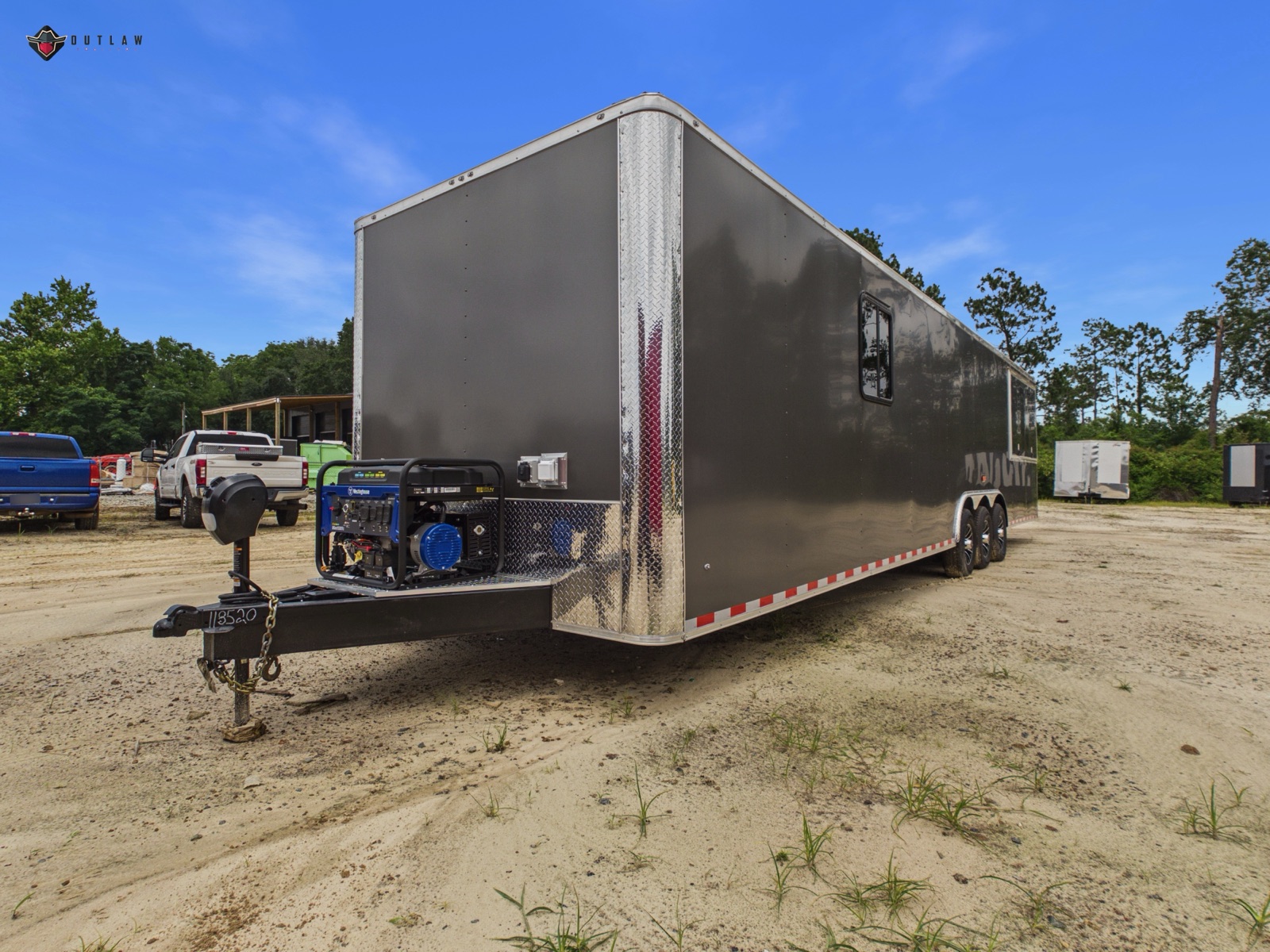
Once the shell and doors are set, plan your power. Decide how many outlets you need and where. Add a breaker box if you are running tools or shore power, interior LED lights so you can see what you are doing, and a generator door if you plan to run a generator without hauling it in and out. Wiring during the build is clean and cheap. Adding it after the walls are closed up is neither.
Decide your electrical before the walls go up. It is the one thing that is a pain to change after the fact.
Step 5: Finish the Interior
This is where you make the trailer work for its job. Pick your flooring for the abuse it will take. Add wall liners so the inside stays clean and takes fasteners. Lay out shelving and E-track for storage and tie-downs. If you will be inside for long stretches in the Georgia heat, this is where insulation, roof vents, and even A/C come into the conversation.
Step 6: Pick Your Poly-Cor Color
With the guts sorted, the fun part is the outside. The Poly-Cor line is a premium polymer coating that holds color and resists the scuffs and weather that fade a plain trailer. Colors run from White, Black, Silver Frost, and Charcoal Gray to Red, Brandy Wine, Indigo Blue, Emerald Green, and loud picks like Penske Yellow, Electric Orange, and Electric Blue. If the trailer carries your business, choose a color that matches your brand.
Step 7: Review the Whole Build
Before you sign off, run back through every page and make sure the choices work together. A tall interior with no roof vents bakes in summer. A ramp door with no rear brakes strains your tow vehicle. Our custom builder lets you review all your options in one modal before you commit, so you catch these things early. When it looks right, lock it in.
Build It With Us
Outlaw Supercenter in Douglas, Georgia builds custom Diamond Cargo and Xtreme Cargo trailers spec by spec, keeps 200 plus in stock, and finances all credit types. Start in our custom builder or call (800) 281-5084 and we will walk every step with you.
Frequently Asked
What should I decide first when speccing a trailer?+
Size and layout come first. Figure out the biggest and heaviest thing you will haul, whether you need to stand inside, and where you will store it. Every later choice depends on getting the footprint right.
When do I choose the electrical package?+
Plan electrical before the interior walls are finished. Wiring outlets, a breaker box, lighting, and a generator door during the build is clean and affordable, while adding them afterward means tearing back into the walls.
Which door setup is best?+
It depends on how you load. A rear ramp door suits wheeled equipment, barn doors suit dock loading and lighter builds, and a side man-door is a daily convenience for getting in without opening the rear.
Can I see all my options before I commit?+
Yes. The Outlaw Supercenter custom builder lets you review every selection in one place before you finalize, so you can catch conflicts like a tall interior with no vents before the trailer is built.
Does Outlaw Supercenter finance custom builds?+
Yes. Outlaw Supercenter offers financing for all credit types on custom builds. Call (800) 281-5084 to talk through your spec and your options.
Ready to roll?
200+ trailers in stock in Douglas, GA. Financing for all credit types.