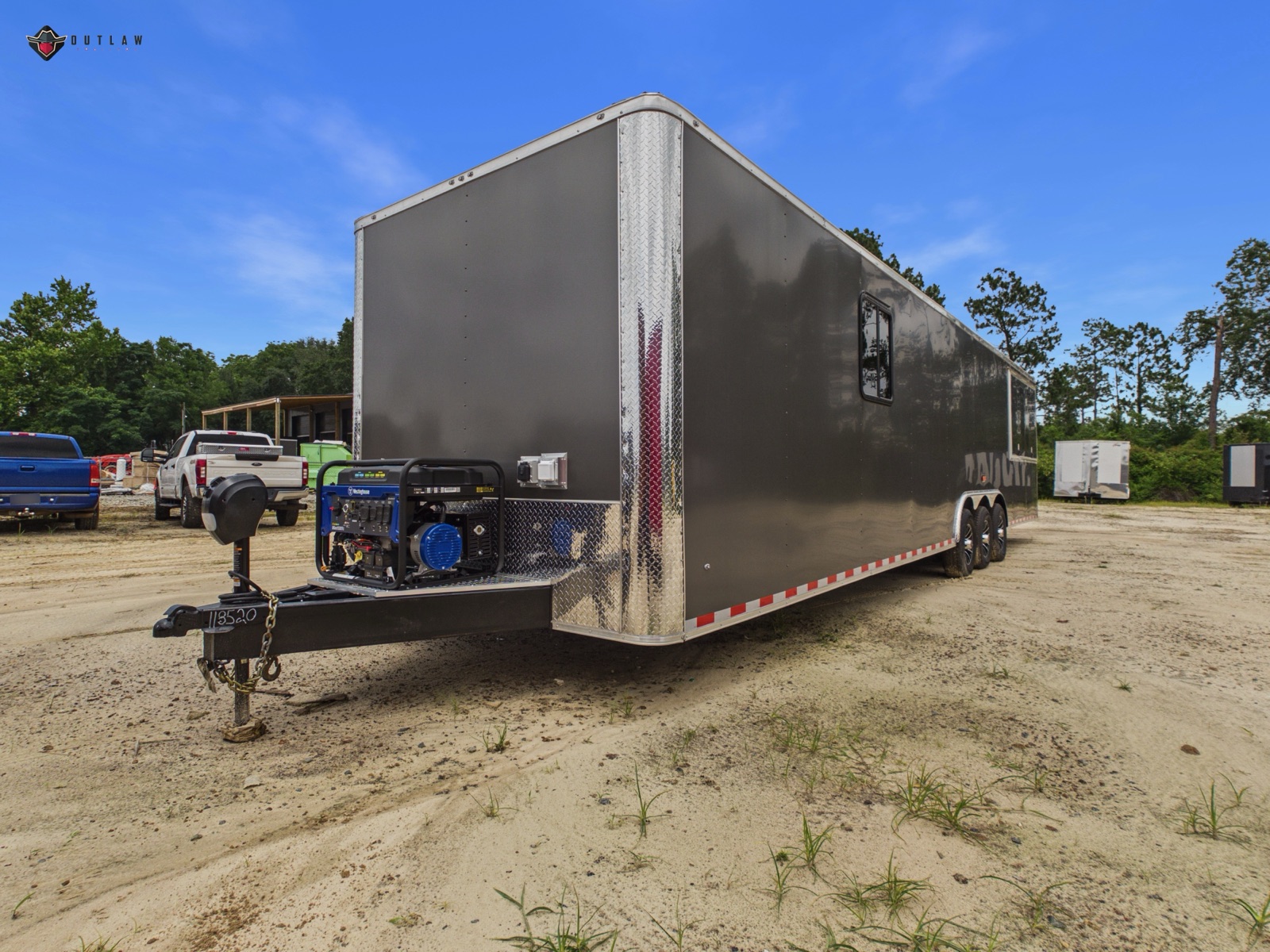
Setting Up a Cargo Trailer for a Pressure Washing Business
Water is heavy and hoses are long. A pressure washing trailer is really a plumbing and weight problem with a box around it.
September 2, 2026 · 5 min read
Pressure washing is one of the most common businesses started out of an enclosed trailer in South Georgia, because the startup list is short: a machine, a water tank, hoses, a surface cleaner and something to carry it all in. The trailer is the something. Get it right and the rig sets up and packs down in minutes at every driveway. Get it wrong and you spend the first year fighting weight and mildew. Here is how to spec it.
Start with the water
Water weighs a little over eight pounds a gallon. A 200-gallon buffer tank full is roughly 1,700 pounds before the machine, reels and chemicals go in. That single number drives the whole build. A single-axle 6x12 is at or past its limit with a full tank and a commercial machine; a tandem-axle 7x14 or 7x16 carries it with room to spare. Our post on water tanks and plumbing covers placement and drainage in detail, but the short version is: the tank sits over or just ahead of the axles, never at the rear.
The right size and axle
For a solo operator with one machine and a buffer tank, a 7x14 tandem is the sweet spot. It leaves room for a surface cleaner, ladders, chemical totes and a workbench, and it tows behind a half-ton truck. Operators running two machines, a soft wash system and a larger tank should step up to a 7x16 and consider a 5,200 lb axle package. Electric brakes are not optional at these weights.
Layout that works
- Tank forward of center, strapped to the floor and framed so it cannot shift.
- Machine behind the tank on a raised platform so its exhaust and heat are not trapped at floor level.
- Hose reels mounted at the rear or on the side door wall so you pull hose without entering the trailer.
- Chemical storage in a ventilated cabinet, separated from anything that corrodes.
- A clear aisle down the door side so you can reach everything without climbing over it.
Ventilation is not optional
A pressure washing trailer is wet every day. Hoses go back in dripping, the surface cleaner sheds water, and the machine runs hot. Without airflow the inside of the box becomes a humid closet that grows mildew and rusts everything metal. Order roof vents at build time, add a side vent low on the opposite wall to create a draft, and consider a powered exhaust fan near the machine. Our guide to roof vents, A/C and airflow walks through the options.
Floor and walls
Standard plywood floors take water for a while, then swell. Ask for a sealed floor or plan on coating it yourself before the first job. A rubber or aluminum tread floor over the plywood is worth it under the tank and machine. Wall liner up to at least hip height keeps the spray from soaking into the wall panels.
Doors and access
A ramp door makes it easy to roll a wheeled machine or surface cleaner in and out. A side door lets you grab chemicals and small tools without dropping the ramp at every stop. If you plan to hang reels on the door wall, order the 36-inch side door rather than the 32-inch so you still have room to get in with the reels mounted.
Power and lighting
Most pressure washing rigs run gas machines, so the electrical needs are modest: interior LED lights so you can pack up after dark, a 12V battery for the lights and a pump if you run a soft wash system, and a 110V package if you charge tools in the trailer. Our work trailer electrical packages post explains what each package includes.
If you are building a rig from scratch, tell us the tank size and the machine, and we will spec the custom build around the weight instead of guessing. Contractors across Valdosta, Tifton and the rest of our delivery range run this exact setup.
Frequently Asked
Can I run a pressure washing business out of a single-axle trailer?+
With a small tank and a residential-grade machine, yes. Once you add a buffer tank over about 100 gallons and a commercial machine, the weight pushes you to a tandem axle.
Should the tank be inside or on an open trailer?+
Inside. An enclosed trailer keeps the machine, hoses and chemicals out of the weather and out of sight, and it looks like a business when it pulls up. The trade-off is that you must ventilate it.
Do I need a special floor?+
A sealed or coated floor under the tank and machine. Standard plywood will swell over a season of daily wet loading.
Ready to roll?
200+ trailers in stock in Douglas, GA. Financing for all credit types.