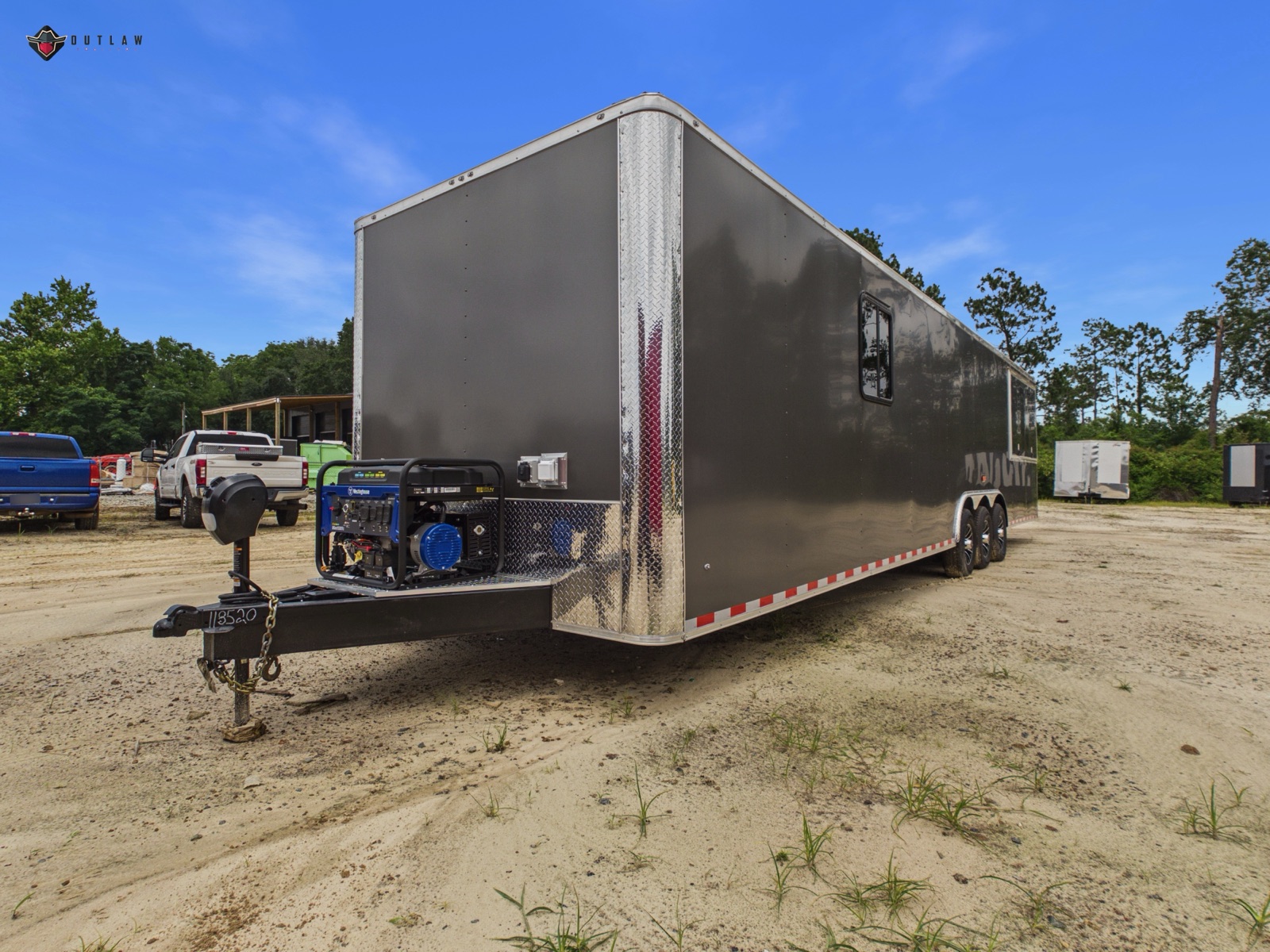
Coupler, Jack and Safety Chains: The Connection Points
Every other part of the trailer matters less than the few inches where it attaches to the vehicle.
September 12, 2026 · 4 min read
The coupler, the jack, the chains and the breakaway cable are the connection. They get almost no attention and they are the parts where failure is catastrophic rather than inconvenient.
The coupler
- Check for wear in the socket — a coupler worn oversize can come off a ball under the right bump.
- Confirm the latch closes fully and the lock pin goes through. A latch that will not close fully is not attached.
- Grease the ball and the coupler socket. A dry connection wears fast and squeals.
- Look for cracks in the coupler body and at the weld to the tongue.
- Confirm the coupler size matches the ball. This mismatch is more common than it should be and it is exactly the failure that drops a trailer.
Safety chains
- Crossed under the tongue, so the tongue lands in the cradle if it comes off the ball. This is the whole point and plenty of people run them straight.
- Enough slack to turn, not enough to drag.
- Rated for the load.
- Hooks with working latches, attached to the vehicle's designated points rather than to a bumper or a bolt.
- Inspect for stretched or worn links.
The breakaway cable
On a braked trailer, the breakaway applies the trailer brakes if it separates from the vehicle.
- Attach it to the vehicle, not to the safety chains. Attached to the chains it goes with the trailer and does nothing.
- Check the battery. This is the part that is dead on a startling number of trailers.
- Test that pulling the pin actually applies the brakes.
- Our guide on brake controller setup covers the wider braking system.
The jack
- Grease it. A jack that is hard to crank is a jack that will seize.
- Check the foot or wheel, which takes the abuse.
- Confirm it retracts fully and locks up out of the way for travel. A jack left down is the classic thing that catches on a kerb.
- Look for bending in the tube, which is what happens when it is used to lift more than it should.
Hitch on the vehicle side
The ball must be the right size and tight. Check the torque periodically — a ball that works loose is not a theoretical risk.
Our guide on hitch types covers matching the hitch to the trailer, and the towing safety guide covers the pre-departure routine.
Two minutes, every trip
Coupler latched and pinned, chains crossed, breakaway attached to the vehicle, jack up and locked, lights working. That is the whole check and it is on every pre-trip list for a reason.
Questions about your setup? Call (800) 281-5084.
Frequently Asked
Why should safety chains be crossed?+
So the tongue lands in the cradle formed by the chains if it comes off the ball, rather than digging into the road. Running them straight defeats the entire purpose.
Where does the breakaway cable attach?+
To the tow vehicle, never to the safety chains. Attached to the chains it goes with the trailer in a separation and does nothing. Check the breakaway battery too — it is dead on a great many trailers.
What is the most commonly missed coupler check?+
Confirming the latch closes fully with the pin through, and that the coupler size matches the ball. A mismatch or an unlatched coupler is exactly the failure that drops a trailer on the road.
Ready to roll?
200+ trailers in stock in Douglas, GA. Financing for all credit types.