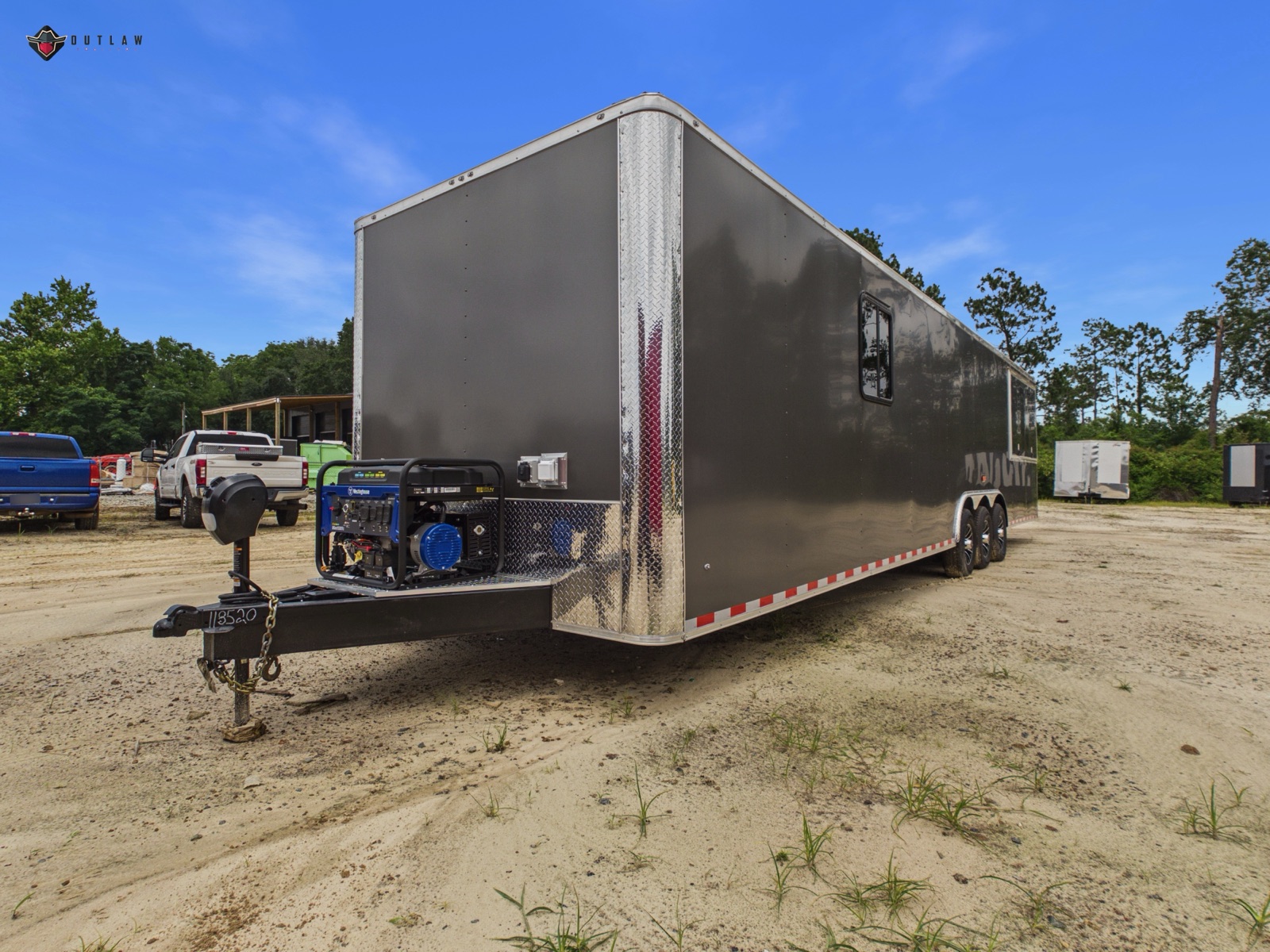
Towing a Cargo Trailer Safely: A Beginner's Guide
Hooking up your first cargo trailer does not have to be nerve-racking. Here is exactly how to load it, hitch it, and drive it like you have done it a hundred times.
February 9, 2026 · 8 min read
Pulling a cargo trailer for the first time can feel like a big step, but the truth is it comes down to a handful of fundamentals done right every single time. Get the weight distributed correctly, hitch everything the way it is supposed to be hitched, and give yourself room to react, and you will be surprised how quickly it becomes second nature. This guide walks you through it start to finish, the same way we would explain it to somebody picking up a new trailer off our lot here in Douglas.
Start With Weight, Not Speed
Before you ever touch the gas, the single most important thing about safe towing is how the load sits inside the trailer. A cargo trailer that is loaded wrong will fight you at every bump, and the classic mistake is putting too much weight behind the axle. That causes the trailer to sway, and sway is what puts people in the ditch.
The rule of thumb is simple. You want roughly 60 percent of your cargo weight sitting ahead of the trailer's axle and about 40 percent behind it. Heavy items go low and forward, centered side to side. Strap everything down so nothing shifts while you are rolling, because a load that slides mid-trip changes your balance without warning.
Get Your Tongue Weight Right
Tongue weight is the downward force the trailer's coupler puts on your hitch ball. You want that to land between 10 and 15 percent of the total loaded trailer weight. Too little tongue weight and the trailer will wag back and forth behind you. Too much and it can lighten the front of your truck and hurt your steering. If you loaded the trailer and it feels squirrelly at speed, tongue weight is almost always the culprit.
- Load heavy gear over and slightly ahead of the axle, never all the way at the back
- Keep the load centered left to right so one tire is not carrying more than the other
- Strap and secure everything so it cannot slide during hard braking
- Aim for tongue weight around 10 to 15 percent of the loaded trailer weight
- Never exceed the trailer's GVWR, which is the max loaded weight rating stamped on the VIN plate
Hitching Up the Right Way
A proper hookup is a checklist, not a guess. Match your hitch ball size to the coupler, either a 2 inch ball or a 2 and 5 16 inch ball on most cargo trailers, and make sure the coupler seats fully and the latch locks down. Then cross your safety chains under the coupler in an X pattern so if the trailer ever came off the ball, it would catch in that cradle instead of dropping to the pavement.
Plug in your 7-pin or 4-pin wiring, raise the jack all the way up, and walk around to test every light before you leave the driveway. Running lights, brake lights, turn signals, and if your trailer has electric brakes, confirm the brake controller is talking to them.
The five minutes you spend walking around the trailer before you pull out is the cheapest insurance you will ever buy.
Mirrors, Following Distance, and Turns
A loaded cargo trailer changes how your rig behaves in every direction. Set your mirrors so you can see down both sides of the trailer, and add extension mirrors if the box is wider than your truck. Once you are moving, everything happens slower and takes more room.
- 1Double your following distance since it takes far longer to stop with a loaded trailer behind you
- 2Swing wider on turns because the trailer tires track inside the path your truck takes
- 3Brake earlier and smoother, letting the electric brakes do their share of the work
- 4Check your mirrors constantly for sway, drifting, or anything working loose
- 5Slow down before curves and downgrades rather than braking in the middle of them
Backing Up Without Losing Your Cool
Backing a trailer trips up almost every beginner, but there is a trick that makes it click. Put your hand at the bottom of the steering wheel. Whichever way you move your hand is the way the back of the trailer goes. Make small inputs, go slow, and pull forward to reset anytime the angle gets away from you. Nobody backs perfectly the first week, so practice in an empty parking lot before you need to do it for real.
Highway Habits That Keep You Safe
On the open road, wind and passing trucks will push on that big flat side of a cargo trailer. Keep your speed reasonable, most trailer tires are only rated to 65 miles per hour, and never try to steer hard out of a sway. If the trailer starts to sway, ease off the gas, keep the wheel straight, and gently apply just the trailer brakes using your controller's manual lever. Fighting the wheel makes sway worse.
None of this is complicated once you have done it a few times. If you are shopping for your first cargo trailer and want somebody to walk you through hitching, loading, and what your truck can safely pull, give the crew at Outlaw Supercenter a call at (800) 281-5084. We have got over 200 trailers in stock and we would rather send you home confident than just sell you a box on wheels.
Frequently Asked
How much tongue weight should a cargo trailer have?+
Aim for tongue weight between 10 and 15 percent of the total loaded trailer weight. Too little causes sway and too much can overload your hitch and lighten your truck's front end.
What causes trailer sway and how do I stop it?+
Sway is usually caused by too little tongue weight, too much weight loaded behind the axle, or high speed in crosswinds. If it starts, ease off the gas, keep the wheel straight, and apply the trailer brakes only using your controller's manual lever.
How should I load a cargo trailer?+
Put roughly 60 percent of the weight ahead of the axle and 40 percent behind, keep heavy items low and centered side to side, and strap everything down so it cannot shift while you drive.
Do I really need to test the lights every time?+
Yes. A quick walk-around to confirm running lights, brake lights, turn signals, and electric brakes takes five minutes and catches problems before they become a roadside emergency or a ticket.
How fast can I safely tow a cargo trailer?+
Most trailer tires are speed rated to 65 miles per hour. Staying at or below that speed reduces heat buildup in the tires and lowers your risk of sway.
Ready to roll?
200+ trailers in stock in Douglas, GA. Financing for all credit types.