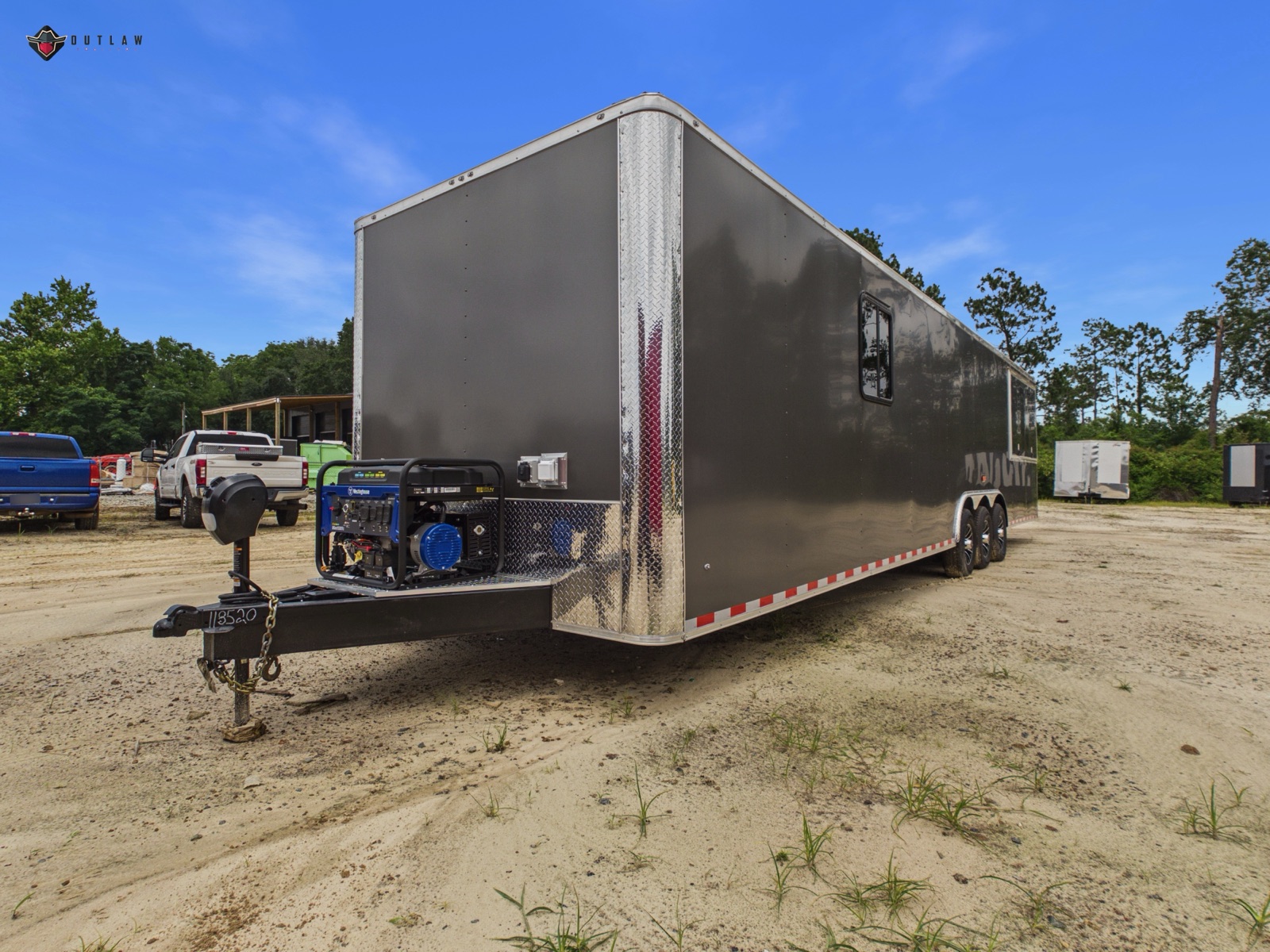
How to Choose the Right Cargo Trailer Size
Width, length, and how you load it all matter more than most folks realize. Here is how to pick a cargo trailer size that fits your hauling for years, not just today.
June 29, 2026 · 7 min read
Picking the right cargo trailer size is the single biggest decision you will make when you buy. Go too small and you are cramming gear in every trip, leaving stuff behind, or shopping for a second trailer six months later. Go too big and you are dragging around dead weight, burning fuel, and fighting to park it. The good news is that once you understand how trailer sizes actually work, the right answer usually gets obvious fast.
At Outlaw Supercenter in Douglas, Georgia, we keep 200-plus trailers in stock across every common size, so we help folks work through this every day. Here is the same walk-through we use on the lot, boiled down so you can figure out your size before you ever pick up the phone.
Start With Width, Not Length
Most people start by asking how long a trailer they need. Smart buyers start with width, because width sets the whole personality of the trailer. Enclosed cargo trailers generally come in a few standard widths, and each one is built for a different kind of hauling.
- 5-wide: the compact workhorse. Great for motorcycles, lawn equipment, small moves, and anyone who wants to tow behind a smaller vehicle. Fits in a standard garage.
- 6-wide: a little more elbow room for tools, gear, and side-by-side loading without jumping up to a full 7-wide.
- 7-wide: the most popular all-around size. Wide enough to walk around most cargo, load a riding mower or ATV, and still tow easily behind a half-ton truck or SUV.
- 8.5-wide: the full commercial width. This is the size for cars, contractor gear, vending setups, race haulers, and anything where you need to move around big items inside.
One rule worth burning into memory: an 8.5-wide trailer is wide enough that it drives like a bigger rig and needs proper marker lighting. If you do not truly need that width, a 7-wide will tow easier, park easier, and cost less. But if you plan to haul a full-size vehicle or work out of the trailer, do not cheat the width to save a few bucks. You cannot add it later.
Then Figure Your Length
Once width is settled, length is where you fine-tune. Cargo trailers usually step up in even increments, and the right length depends on what you are loading and how much of it moves with you at once.
- 8 to 10 feet: single-item hauling. One motorcycle, a small load of tools, weekend gear, or a light move.
- 12 to 14 feet: the sweet spot for lawn crews, small contractors, and general use. Room for a mower plus trimmers, blowers, and hand tools with space to spare.
- 16 to 20 feet: serious work capacity. Multiple machines, a full moving load, a car with gear around it, or a mobile business setup.
- 24 feet and up: race haulers, big equipment, and folks who basically run a shop on wheels.
A handy trick: measure the longest single thing you plan to load, then add three to four feet for tie-down room, a place to stand, and the ramp door swing. That number gets you very close to the length you actually want.
Buy for the load you will have in two years, not just the one sitting in your garage today. Trailers are a lot cheaper to size right the first time than to trade up later.
Match Size to Your Tow Vehicle
Size is not just about what fits inside. It is about what your truck or SUV can safely pull once the trailer is loaded. Every trailer has a gross vehicle weight rating, and your tow vehicle has a rated towing capacity. The loaded trailer has to stay comfortably under that number, with margin to spare for hills, wind, and hard stops.
As a rough guide, a small SUV or half-ton truck handles most 5-wide and 7-wide single or tandem axle trailers with ease. Once you move into long 8.5-wide tandems or triple axle trailers loaded with heavy cargo, you want a three-quarter-ton or one-ton truck under you. When in doubt, tell us your tow vehicle and we will make sure the trailer you like is a safe match before you drive off.
Height and Door Details People Forget
Interior height matters as much as floor space if you are loading tall items or want to stand up inside. Many cargo trailers come standard around six feet of interior height, but extra-height options give you six and a half feet or more, which is a game changer for contractors and anyone spending real time working inside.
Think about doors too. A rear ramp door is a must for anything you roll or drive in. A side door makes daily in-and-out access far easier so you are not opening the whole back end every time you need one tool. Getting these right up front saves a lot of frustration down the road.
The Bottom Line on Sizing
Choose your width based on the widest thing you haul, choose your length based on the longest load plus working room, and confirm your tow vehicle can pull it loaded. Nail those three and you will have a trailer that fits your life for years. If you are still on the fence between two sizes, it almost always pays to go one step bigger.
You can browse our full inventory of single, tandem, and triple axle trailers online, and financing is available for all credit types, whether you have great credit, bad credit, or no credit history yet. If you want a straight answer on the right size for what you haul, call Outlaw Supercenter at (800) 281-5084 and we will walk it through with you.
Frequently Asked
What size cargo trailer is best for general use?+
For most people, a 7-wide trailer between 12 and 16 feet is the best all-around size. It holds a riding mower, ATVs, tools, or a small move, and still tows easily behind a half-ton truck or SUV.
Can I fit a car in a cargo trailer?+
Yes, but you need an 8.5-wide trailer. Full-size vehicles will not fit in a 7-wide or narrower. Most car haulers run 8.5 feet wide and at least 18 to 20 feet long to leave room for tie-downs and walking space.
How do I know if my truck can pull the trailer I want?+
Compare your tow vehicle's rated towing capacity to the trailer's gross vehicle weight rating when it is fully loaded. Stay comfortably under your truck's limit with margin to spare. If you are unsure, tell us your vehicle and we will confirm a safe match.
Should I buy a bigger trailer than I need right now?+
Usually yes. If you are between two sizes, going one step bigger is smart because your hauling needs tend to grow, and adding capacity later means buying a whole new trailer. Just make sure your tow vehicle can handle the larger size.
Ready to roll?
200+ trailers in stock in Douglas, GA. Financing for all credit types.